.png)
How to Get a Jamaican Police Record from Canada for Immigration or Employment
You can get a Jamaican police record from Canada by applying to the JCF Criminal Records Office through a Jamaican High Commission or consulate, or by authorizing someone in Jamaica to submit and collect it for you. You usually do not need to travel to Jamaica, but you do need certified fingerprints, identity documents, photos, the correct purpose, the fee, and enough processing time.
A Jamaican police record is often requested for immigration, visa, work, and licensing purposes. If you are applying for Canadian permanent residence, a U.S. or U.K. visa, or a job that asks for overseas background checks, getting the details right the first time can save weeks.
This guide is general information, not legal advice. Always follow the latest instructions from the Jamaican authorities, IRCC, the visa office, or the employer requesting the record.

What it is and who needs it
A Jamaican police record is an official criminal record check issued in Jamaica. It is commonly called a Jamaican police certificate, police record, or certificate of character, depending on who is asking for it.
For immigration, it helps a government agency assess whether an applicant has a criminal record in Jamaica. For employment, it helps an employer confirm background information for roles that involve trust, security, finance, children, vulnerable people, or regulated work.
The most common reasons people request it from Canada include:
Canadian permanent residence through IRCC
U.S. immigrant or non-immigrant visa applications
U.K. visa or immigration applications
Overseas employment screening
Professional licensing
Volunteer or security-related roles
Adoption, residency, or citizenship paperwork in certain countries
For IRCC permanent residence, the rule that matters most is time spent in Jamaica. If you lived in Jamaica for six months or more, IRCC may ask for a police certificate from Jamaica. This can apply even if you are now living in Canada and have not returned to Jamaica in years.
IRCC also has timing rules. If Jamaica is no longer your country of residence, the police certificate usually needs to have been issued after the last time you stayed there for six months or more in a row. If you currently live in the country that issued the certificate, IRCC generally wants it issued within the recent validity window stated in its instructions.
For U.S. and U.K. visas, the request depends on the visa category, age, residence history, and consular instructions. Some applicants need police certificates from every country where they lived for a set period. Others only need them if the visa office asks.
Employers may ask for a Jamaican police record when a Canadian background check is not enough. This is common when the job requires a complete history covering time lived outside Canada.
Issuer: JCF Criminal Records Office, Kingston
The issuing authority is the Jamaica Constabulary Force Criminal Records Office in Kingston, Jamaica. This is the office responsible for processing criminal record searches and issuing official police records for Jamaica.
The JCF Criminal Records Office checks the applicant’s identity details and fingerprints against Jamaican criminal records. If there is no disclosable record, the certificate will usually confirm that result. If a record exists, the certificate may show the information according to Jamaican procedures.
When applying from Canada, you are still applying to the Jamaican authority. The Canadian side of the process is mainly about preparing documents correctly, especially your fingerprints and certified copies. A Canadian police station, fingerprinting agency, lawyer, or notary does not issue the Jamaican police record. They only help prepare the documents that Jamaica requires.
That distinction matters. A common mix-up is assuming an RCMP criminal record check can replace the Jamaican certificate. It cannot. If IRCC, a visa officer, or an employer specifically asks for a police certificate from Jamaica, you need the Jamaican-issued record.
The process for a Jamaican Police Record from Canada can feel confusing because you may deal with several parties:
The JCF Criminal Records Office in Kingston
A Jamaican High Commission, embassy, or consulate
A fingerprinting provider in Canada
A notary or commissioner for oaths
A representative in Jamaica, if you use one
The immigration office, visa office, or employer requesting the record
The key is to prepare each document so the JCF can process it without questions.
What you need
The exact requirements can change, so check the latest JCF or consular instructions before sending anything. In most cases, applicants from Canada should be ready to provide the following items.
Application form
You need the required police record application form. Complete it carefully and make sure your name, date of birth, place of birth, current address, and Jamaican address history are consistent with your passport and immigration records.
Use your full legal name. If you changed your name through marriage, divorce, adoption, or a legal name change, include supporting documents if the instructions require them.
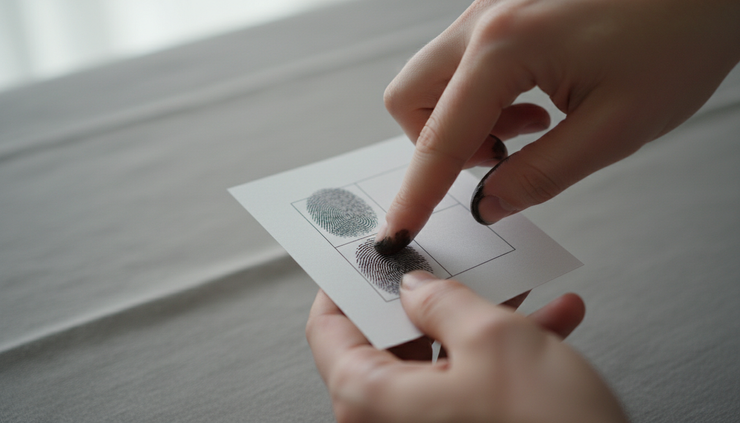
Certified fingerprint set
You need a full set of fingerprints taken and certified by an authorized provider. The fingerprints must be clear, complete, and properly labelled.
If you are in Alberta, you can book RCMP-accredited fingerprinting in Edmonton to prepare fingerprint cards for foreign police certificate applications. Make sure you explain that the fingerprints are for a Jamaican police record, not only a Canadian criminal record check.
Digital fingerprints may be captured electronically in Canada, but foreign police certificate applications often still require a printed fingerprint form. Ask for the format required for Jamaica.
Certified passport copy
You generally need a certified copy of your passport identification page. This is the page with your photo, full name, passport number, nationality, date of birth, and expiry date.
The certification should come from an accepted authority, such as a notary public, lawyer, commissioner for oaths, or other approved certifying person, depending on the instructions.
Two photos
Most applications require two recent passport-style photos. They should be clear, matching, and taken against a plain background.
Do not reuse old photos if your appearance has changed. Do not submit photos with shadows, hats, filters, heavy glare, or cropped heads.
Purpose of the record
You need to state why you are requesting the police record. Common purposes include:
Canadian immigration
U.S. visa
U.K. visa
Employment
Work permit
Residency
Professional licensing
Be specific. If the police record is for IRCC, say it is for Canadian immigration or permanent residence. If it is for a U.S. visa, say U.S. visa. A vague purpose can cause delays if the receiving authority expects specific wording.
Fee
A processing fee is required. The amount and payment method can change, especially for applicants outside Jamaica. Confirm the current fee with the Jamaican High Commission, consulate, or the JCF instructions before applying.
Some applicants also pay extra costs for fingerprinting, notarization, courier service, local representation in Jamaica, or document authentication if another authority requests it.
Two routes
There are two main ways to apply from Canada. The best route depends on timing, location, comfort level, and whether you have someone you trust in Jamaica.
Route 1. Apply through a Jamaican consulate or embassy
Many applicants start with the Jamaican High Commission, embassy, or consulate responsible for their area in Canada. This route is often preferred when the applicant does not have a trusted representative in Jamaica.
The general process looks like this:
Confirm the current requirements with the Jamaican mission.
Complete the application form.
Get fingerprints taken and certified in Canada.
Certify your passport copy.
Prepare your photos, purpose, and fee.
Submit the package as instructed.
Wait while the request is sent or processed through the proper Jamaican channel.
Receive the completed police record according to the mission’s process.
This route is organized and avoids giving personal documents to a private representative. The tradeoff is that it may take longer, especially if documents need to move between Canada and Jamaica through official channels.
Route 2. Use a representative in Jamaica with notarized authorization
The second option is to authorize a trusted person in Jamaica to act for you. This may be a family member, close friend, attorney, or professional representative.
You usually need a notarized authorization letter that clearly allows the person to submit the application, communicate about it, and collect the police record on your behalf. The representative may also need a copy of their own government-issued ID.
Your package may include:
Completed application form
Certified fingerprint set
Certified passport copy
Two passport photos
Purpose of the police record
Required fee or proof of payment
Notarized authorization letter
Representative’s identification, if required
This route can be useful when timing is tight or when you already have a reliable person in Kingston. It also creates more responsibility. Choose the representative carefully because they may handle sensitive identity documents.
Some countries, employers, or visa offices may ask for extra document steps after the certificate is issued. If that happens, you may need apostille and authentication services before the document can be used outside Jamaica, depending on the receiving authority’s rules.

Timeline
Expect the process to take about 6 to 10 weeks from Canada in many cases. This is a practical estimate, not a guarantee.
Several things can affect the timeline:
How quickly you prepare fingerprints and certified copies
Whether your package is complete
Whether the fee is correct
Whether the fingerprints are accepted
Courier time between Canada and Jamaica
Whether you apply through a consulate or a representative
JCF workload and public holidays
Whether extra verification is needed
If the record is for IRCC, do not wait until the last week before your upload deadline. Police certificates can take time, and IRCC deadlines are often strict. If you cannot get the certificate by the deadline, you may need to upload proof that you requested it, along with an explanation. IRCC decides whether to grant more time.
For IRCC validity, the safest approach is to match the certificate date to your residence history. If you no longer live in Jamaica, the certificate should generally be issued after your last qualifying stay there. If you still live in Jamaica, check IRCC’s current time limit for recently issued police certificates.
For employment, ask the employer how recent the record must be. Some employers accept records issued within the last few months. Others require a new one for the hiring file.
Common mistakes
Small errors can cause big delays. These are the most common issues applicants run into.
Submitting poor-quality fingerprints
Smudged, incomplete, or low-contrast fingerprints may be rejected. Use an experienced provider and ask them to check quality before you leave.
Using the wrong purpose
A police record for immigration, employment, or a visa may need the correct purpose stated on the application. If the purpose is too vague or wrong, the receiving authority may not accept it.
Sending an uncertified passport copy
A regular photocopy may not be enough. If the instructions ask for a certified copy, make sure the certifier signs, dates, stamps, and writes the required wording.
Forgetting authorization for a representative
If someone in Jamaica is applying or collecting for you, they usually need written authorization. A casual message or verbal permission is not enough.
Applying too late
Six to ten weeks can pass quickly, especially if fingerprints are rejected or courier delivery takes longer than expected. Start early, especially for IRCC permanent residence files.
FAQ
Can I get it without going to Jamaica?
Yes. Many applicants get a Jamaican police record from Canada without traveling to Jamaica. You can usually apply through a Jamaican High Commission or consulate, or authorize a trusted representative in Jamaica to handle the submission and collection.
Does IRCC accept it?
Yes, IRCC generally accepts police certificates issued by the proper Jamaican authority. The certificate must match IRCC’s instructions for Jamaica and must meet IRCC’s timing rules based on your residence history. If IRCC asks for a Jamaican police certificate, do not upload an RCMP check as a substitute.
What if prints are rejected?
You will need to have your fingerprints taken again and resubmit them according to the instructions. This is one reason to use a provider familiar with foreign police certificate applications. Keep copies of receipts, tracking numbers, and any rejection notice so you can explain delays if needed.
Do I need it authenticated for a US visa?
Often, a U.S. visa application only requires the police certificate itself, as instructed by the U.S. consular process. Authentication is not always required. That said, requirements can vary by visa type and situation, so follow the instructions from the U.S. visa office. If a receiving authority asks for authentication or apostille, arrange that separately.

How Can Document Genie Help You?
Document Genie helps applicants prepare document packages for overseas police records, immigration files, employment checks, and supporting paperwork. Since 2017, our team has handled thousands of similar files for clients dealing with time-sensitive immigration, visa, and document requests.
Clients also rely on our experience and service record, including 3,000 Google reviews at 4.9 stars.
WE DO help with practical document preparation steps, including:
Certified fingerprinting support for foreign police certificate applications
Guidance on preparing passport copies, photos, and supporting documents
Notarized authorization letters for representatives in Jamaica
Commissioner for oaths and notary-related document support
Apostille, authentication, and legalization help when required by the receiving authority
Courier and document handling guidance where available
Review of your package for common errors before submission
LIMITS: We do not issue Jamaican police records, make decisions for the JCF, IRCC, U.S. consulates, U.K. authorities, or employers, and we cannot guarantee processing times or outcomes.
Need help preparing your Jamaican police record package from Canada? Call 587-501-2088 or book online with Document Genie at our Edmonton, Alberta location.


Comments